🌏 1. APEC의 개요
**APEC(아시아·태평양 경제협력체)**는
아시아·태평양 지역의 경제 성장, 무역 자유화, 투자 촉진을 목표로 하는 지역경제협력체입니다.
- 영문명: Asia-Pacific Economic Cooperation
- 설립연도: 1989년
- 설립 목적:
- 역내(域內) 국가 간 경제 성장 촉진
- 무역 및 투자 자유화
- 경제·기술 협력을 통한 개발 격차 완화
- 포용적이고 지속 가능한 발전 추구
- 성격: 비법적 구속력(non-binding), 비형식적(informal), 협의체적(cooperative) 기구
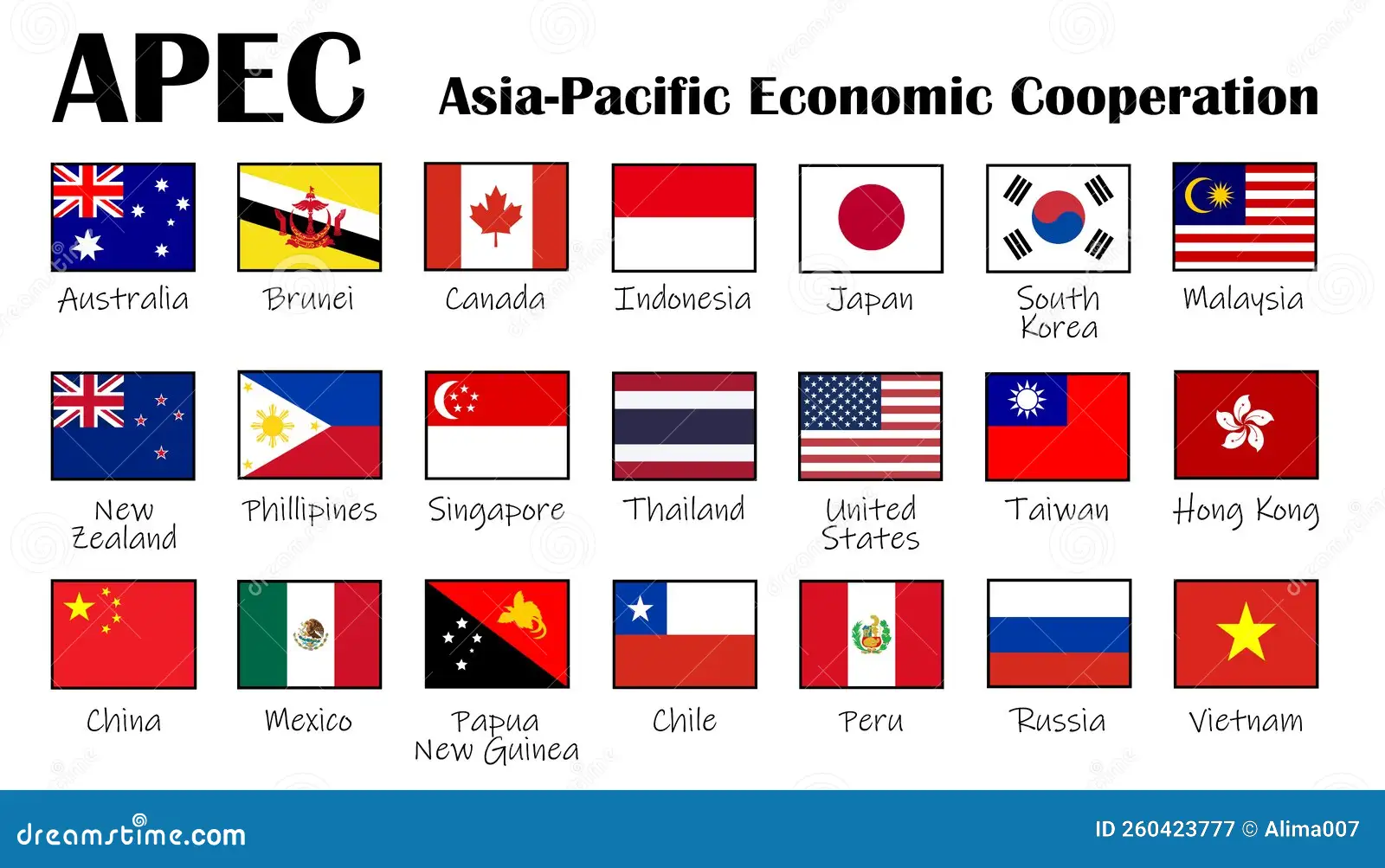
- 회원국(2025년 기준): 총 21개국·지역경제체 (미국, 중국, 일본, 한국, 호주, 캐나다, 러시아, 뉴질랜드, 인도네시아, 말레이시아, 필리핀, 싱가포르, 태국, 베트남, 브루나이, 파푸아뉴기니, 칠레, 멕시코, 페루, 홍콩, 대만)
🏛 2. 설립 배경
1) 1980년대 후반의 국제 정세
- 냉전이 완화되고 세계 경제가 글로벌화(Globalization) 단계로 진입.
- GATT(관세 및 무역에 관한 일반협정) 체제하의 다자무역체제 강화.
- 아시아·태평양 지역이 세계 경제 성장의 핵심축으로 부상하면서,
이 지역의 경제 협력 필요성이 대두됨.
2) 지역주의 확산
- 유럽에서는 유럽공동체(EC, 나중의 EU),
미주에서는 NAFTA(북미자유무역협정) 등 지역 경제 통합 움직임이 활발해짐. - 아시아·태평양 지역도 이에 대응해 경제협력 메커니즘 구축 필요성을 느끼게 됨.
3) 주도국의 역할
- 호주가 1989년 APEC 창설을 공식 제안.
- 한국, 일본, 캐나다, 미국, ASEAN 6개국 등이 동참하면서 창립.
- 첫 회의는 1989년 11월, 호주 캔버라에서 열림.
🧭 3. 주요 목표
APEC의 기본 목표는 세 가지로 정리됩니다.
(1994년 인도네시아 보고르 정상회의에서 명문화됨 — “보고르 목표(Bogor Goals)”)
📌 보고르 목표 (Bogor Goals)
“아시아·태평양 지역의 자유롭고 개방적인 무역과 투자 실현”
- 선진국: 2010년까지
- 개도국: 2020년까지
→ 무역과 투자를 자유화·개방하는 목표 설정
세부 목표
- 무역 및 투자 자유화 (Trade & Investment Liberalization)
- 관세 및 비관세 장벽 철폐
- 투자 규제 완화
- 비즈니스 촉진 (Business Facilitation)
- 통관 절차 간소화, 전자상거래 활성화, 인적 교류 증진
- 경제·기술 협력 (Economic & Technical Cooperation, ECOTECH)
- 기술력 격차 완화, 인적자원 개발, 지속가능한 발전 지원
🏗 4. 조직 구조
APEC은 전통적인 국제기구와 달리 비법적·비구속적 협의체 구조를 가지고 있습니다.
1) 정상회의 (APEC Economic Leaders’ Meeting)
- APEC의 최고 의사결정기구
- 매년 회원국 정상들이 참석
- 역내 주요 현안 논의 및 공동선언 채택
- 1993년부터 정례화 (첫 회의: 미국 시애틀)
2) 각료회의 (Ministerial Meeting)
- 정상회의 직전 개최
- 외교·통상 장관이 참여
- 정상회의 안건 준비 및 실행 점검
3) 고위관리회의 (Senior Officials’ Meeting, SOM)
- 각국 고위 관료로 구성
- 구체적인 정책 조율 및 실무 준비
4) 사무국 (APEC Secretariat)
- 1993년 싱가포르에 설립
- 행정 지원, 회의 준비, 연구·자료 제공
5) 하위기구
- 위원회(Committees): 무역투자위원회, 경제위원회 등
- 작업반(Working Groups): 에너지, 교통, 중소기업, 여성, 기후변화, 디지털 등 다양한 분야에서 협력 추진
💼 5. 주요 활동 및 성과
1) 무역·투자 자유화
- 관세 인하 및 비관세 장벽 완화
- 서비스 무역 확대
- FTAAP(Free Trade Area of the Asia-Pacific) 논의 — 역내 거대 자유무역지대 구상
2) 디지털 경제 및 혁신 협력
- 전자상거래 규범 마련
- 스타트업·혁신 생태계 지원
- 인공지능·데이터 경제 관련 협력
3) 포용적 성장
- 여성의 경제 참여 확대
- 중소기업(SME) 지원
- 지속가능한 발전, 기후변화 대응
4) 코로나19 이후 회복 논의
- 공급망 안정화
- 보건 협력, 백신 분배 지원
- 디지털 전환 가속화 전략
🇰🇷 6. 한국의 역할
한국은 1989년 창립 회원국으로서 APEC의 핵심 회원국 중 하나입니다.
한국의 주요 활동
- 2005년 APEC 정상회의 개최 (부산)
→ “부산 선언(Busan Declaration)” 채택
→ 보고르 목표 이행 점검 및 APEC의 미래 방향 논의 - 디지털경제, 스타트업, 중소기업 혁신 분야에서 주도적 역할
- 기후변화 대응, 녹색성장(Green Growth) 주제 선도
⚖️ 7. APEC의 특징
| 법적 구속력 | 없음 (비구속적 협력체) |
| 결정 방식 | 합의(consensus) |
| 회원 범위 | 국가뿐 아니라 ‘경제체(economies)’ 단위 (홍콩, 대만 포함) |
| 개방성 | 역내외 협력 중시, 폐쇄적 지역주의와 다름 |
| 민간 참여 | 기업인자문회의(ABAC) 등 민간 부문과 긴밀한 연계 |
🔍 8. 한계와 비판
- 비법적 구속력의 한계
→ 회원국의 자발적 참여에 의존, 이행 강제력 부족 - 정치적 이견
→ 미·중 간 패권 경쟁으로 협력 추진이 어려움 - 경제발전 격차
→ 선진국과 개도국 간 이해관계 상충 - 기존 협력체와의 중복
→ RCEP, CPTPP 등과 역할 중복 가능성
🌈 9. 향후 전망
- FTAAP 실현: RCEP(역내포괄적경제동반자협정)과 CPTPP(포괄적·점진적 환태평양경제동반자협정)의 조화 속에서 중장기적으로 APEC이 FTAAP의 틀을 주도할 가능성 있음.
- 디지털 전환 주도: 데이터, 인공지능, 사이버 보안 등 새로운 경제 분야에서 표준 제시.
- 지속가능성 강화: 녹색경제, 에너지 전환, 포용적 성장 중심의 협력 심화.
- 미·중 갈등 조정자 역할: APEC이 정치적 중립성을 유지하며 협력의 플랫폼으로 기능할 수 있음.
🧩 10. 결론
요약하자면,
APEC은 아시아·태평양 지역의 최대 경제협력체로서
회원국 간의 경제 자유화와 기술 협력을 통해
지속 가능한 성장, 포용적 발전, 혁신적 협력을 추구하는 비구속적 협의체입니다.
비록 정치적 갈등과 경제 격차 등의 한계가 존재하지만,
**“개방적 지역주의(Open Regionalism)”**라는 독특한 원칙 아래
국제무역 질서와 경제협력의 핵심 축으로 자리 잡고 있습니다.
🌏 1. Overview of APEC
APEC (Asia-Pacific Economic Cooperation) is a regional economic cooperation forum established to promote economic growth, trade liberalization, and investment facilitation in the Asia-Pacific region.
- Full name: Asia-Pacific Economic Cooperation
- Founded: 1989
- Purpose:
- Promote economic growth and prosperity in the region
- Facilitate free and open trade and investment
- Encourage economic and technical cooperation
- Foster inclusive and sustainable development
- Nature: Non-binding, voluntary, informal, consensus-based forum (not a treaty-based organization)
- Members (as of 2025): 21 economies — including the U.S., China, Japan, Korea, Australia, Canada, Russia, New Zealand, Indonesia, Malaysia, the Philippines, Singapore, Thailand, Vietnam, Brunei, Papua New Guinea, Chile, Mexico, Peru, Hong Kong, and Chinese Taipei (Taiwan)
🏛 2. Historical Background
1) Global context in the late 1980s
- The Cold War was easing, and the world economy was becoming increasingly globalized.
- The GATT framework encouraged multilateral trade liberalization.
- The Asia-Pacific region was emerging as a key engine of global growth, highlighting the need for a cooperative economic mechanism.
2) Rise of regionalism
- Other regions were forming strong economic blocs:
- Europe: European Community (EC, later the EU)
- Americas: NAFTA (North American Free Trade Agreement)
- Asian and Pacific countries recognized the necessity of a similar platform for regional economic cooperation.
3) Founding initiative
- Australia proposed the creation of APEC in 1989.
- Founding members included Australia, Japan, South Korea, the United States, Canada, and six ASEAN members.
- The first ministerial meeting was held in Canberra, Australia, in November 1989.
🧭 3. Objectives
APEC’s main objectives were clearly articulated at the 1994 Bogor Summit in Indonesia, known as the Bogor Goals.
📌 The Bogor Goals
“Free and open trade and investment in the Asia-Pacific region.”
- Developed economies: by 2010
- Developing economies: by 2020
Key Pillars of APEC
- Trade and Investment Liberalization – reducing tariffs and non-tariff barriers.
- Business Facilitation – simplifying customs procedures, promoting e-commerce, enhancing mobility.
- Economic and Technical Cooperation (ECOTECH) – narrowing the development gap, fostering human resources, and promoting sustainable growth.
🏗 4. Organizational Structure
Unlike formal organizations such as the WTO or the EU, APEC operates as a flexible and non-binding forum based on consensus.
1) Economic Leaders’ Meeting
- The highest-level decision-making body.
- Heads of member economies meet annually.
- Discuss regional priorities and issue a Leaders’ Declaration.
- First held in 1993 in Seattle, USA.
2) Ministerial Meeting
- Held annually before the Leaders’ Meeting.
- Attended by foreign and trade ministers.
- Reviews progress and prepares the agenda for leaders.
3) Senior Officials’ Meetings (SOMs)
- High-level government officials who coordinate policy and oversee working-level discussions.
4) APEC Secretariat
- Established in Singapore (1993).
- Provides administrative and technical support, manages communication, and ensures continuity.
5) Committees and Working Groups
- Cover diverse fields such as trade, investment, SMEs, energy, transportation, women, digital economy, and climate change.
💼 5. Major Activities and Achievements
1) Trade and Investment Liberalization
- Reduction of tariffs and non-tariff barriers.
- Expansion of services trade.
- FTAAP (Free Trade Area of the Asia-Pacific) discussions—envisioned as a long-term goal.
2) Digital and Innovation Cooperation
- Developing rules for e-commerce and digital trade.
- Supporting innovation ecosystems and startups.
- Promoting AI, data sharing, and digital inclusion.
3) Inclusive Growth
- Empowering women’s economic participation.
- Supporting SMEs (Small and Medium Enterprises).
- Promoting sustainable and resilient development.
4) Post-COVID-19 Recovery
- Strengthening supply chain resilience.
- Enhancing healthcare cooperation and vaccine distribution.
- Accelerating digital transformation.
🇰🇷 6. South Korea’s Role
South Korea is a founding member and has been one of APEC’s most active participants.
Key contributions
- Hosted the 2005 APEC Summit in Busan.
- Adopted the Busan Declaration, reviewing the Bogor Goals and setting future directions.
- Actively promotes digital economy, innovation, and green growth initiatives.
- Leads cooperation in ICT, startups, and sustainable energy.
⚖️ 7. Characteristics of APEC
| Legal status | Non-binding, voluntary cooperation |
| Decision-making | Consensus-based |
| Membership | “Economies” rather than “countries” (includes Hong Kong & Taiwan) |
| Openness | Open regionalism (not exclusionary) |
| Private sector involvement | Active participation via the APEC Business Advisory Council (ABAC) |
🔍 8. Limitations and Criticisms
- Lack of binding power
→ Implementation relies on voluntary commitment. - Political tensions
→ U.S.–China rivalry complicates cooperation. - Economic disparity
→ Different levels of development create conflicting interests. - Overlap with other frameworks
→ RCEP and CPTPP cover similar goals, potentially reducing APEC’s distinctiveness.
🌈 9. Future Outlook
- Toward FTAAP realization: APEC could serve as an umbrella framework connecting RCEP and CPTPP.
- Digital transformation leadership: Expanding cooperation on data governance, AI, and cybersecurity.
- Sustainability focus: Enhancing green growth, energy transition, and inclusive development.
- Platform for dialogue: Maintaining neutrality and facilitating dialogue amid U.S.–China strategic competition.
🧩 10. Conclusion
In summary,
APEC is the premier economic cooperation forum in the Asia-Pacific region, aiming to achieve sustainable, inclusive, and innovative growth through voluntary cooperation rather than binding treaties.
While it faces challenges such as political tensions and implementation gaps, APEC remains a crucial platform for dialogue and policy coordination, embodying the principle of “Open Regionalism.”