수니파(Sunni Islam)와 시아파(Shia Islam)는 이슬람교 내에서 가장 큰 두 분파로, 이슬람 역사와 종교적 해석에 대한 차이에서 비롯되었습니다. 두 분파는 기원 후 7세기의 이슬람 역사에서 발생한 정치적 갈등과 신앙의 해석 차이로 나뉘었고, 이후로도 사상, 의식, 법 등에서 차이를 보이게 되었습니다. 수니파와 시아파는 여전히 오늘날 이슬람 세계에서 중요한 역할을 하며, 특히 중동 지역에서 그 차이가 뚜렷하게 나타납니다.
1. 수니파와 시아파의 기원
수니파와 시아파의 분열은 이슬람 초창기의 중요한 정치적 사건인 알리의 후계자 문제에서 시작됩니다.
- 수니파는 무함마드의 후계자로 누구든지 자격을 갖춘 인물이라면 될 수 있다고 믿었고, 첫 네 명의 칼리프(후계자)가 합법적인 지도자라 주장합니다. 이들은 무함마드의 직계 후손과 관계 없이 정치적 능력과 공동체의 합의를 중시했습니다.
- 시아파는 무함마드의 후계자가 그의 혈통에 속한 사람이어야 한다고 믿었습니다. 특히, 무함마드의 사촌이자 사위인 알리가 정당한 후계자라 여겼고, 그의 후손들이 지도자로서 역할을 해야 한다고 주장했습니다.
이 정치적 갈등이 시간이 지나면서 종교적 해석과 의식에서도 차이를 만들게 되었고, 수니파와 시아파로 나뉘게 되었습니다.
2. 수니파와 시아파의 주요 차이점
(1) 후계자 문제 (칼리프와 이맘)
- 수니파: 수니파는 칼리프(이슬람의 정치적 지도자)가 선택될 때, 공동체의 합의에 의해 선출된다고 믿습니다. 따라서 지도자는 무함마드의 후손일 필요가 없고, 정치적 자질과 능력이 중요합니다.
- 시아파: 시아파는 이맘(이슬람의 종교적 지도자)이 무함마드의 직계 후손이어야 한다고 믿습니다. 특히, 알리와 그의 후손들만이 정당한 이맘으로서 이슬람 공동체를 이끌 수 있다고 주장합니다.
(2) 종교적 의식과 예배
- 수니파: 수니파는 간단하고 직관적인 예배를 선호하며, 5번의 의무 기도(살라트)나 라마단 기간 동안의 금식 등 기본적인 이슬람의 다섯 기둥을 지키는 것을 강조합니다. 예배 때 손을 얹은 채 기도하는 등 몇 가지 의식에서 차이를 보이기도 합니다.
- 시아파: 시아파는 예배에 있어 좀 더 상징적이고 복잡한 의식을 포함합니다. 예를 들어, 시아파는 타지야라는 의식을 통해 알리의 후손을 기리며, 아슈라라는 특별한 날에는 핏빛 울부짖음과 자기 고행을 통해 알리의 아들 후세인의 순교를 기립니다.
(3) 이슬람 법 (샤리아)
- 수니파: 수니파는 하나의 통합된 이슬람 법학 체계를 따릅니다. 이들은 네 가지 주요 법학교인 한피(한팔리), 말리키(말리키), 샤피이(샤피이), 한발리(한발리) 학교에서 각각 차이를 두고 법을 해석합니다.
- 시아파: 시아파는 자파리 학파라는 하나의 법학 체계를 따르며, 이 체계에서는 이맘의 지도와 해석이 법적 권위를 가집니다. 시아파는 이맘이 하나님의 뜻을 전하는 대리인이자 법을 해석하는 권한을 가지고 있다고 믿습니다.
(4) 사후세계에 대한 관점
- 수니파: 수니파는 일반적으로 이슬람 공동체에 의해 지도자가 선택될 때 후계자를 선출하는 방식으로 간주합니다. 또한, 천국과 지옥에 대한 교리에서도 전반적으로 유사하지만, 수니파 내에서는 많은 다양한 해석이 존재합니다.
- 시아파: 시아파는 이맘의 권위를 중요한 신앙의 기준으로 여기며, 특히 알리와 그의 후손들이 선지자처럼 신의 뜻을 해석한다고 믿습니다. 사후 세계에서도 이맘들이 인간을 인도하는 중요한 역할을 한다고 생각합니다.
3. 수니파와 시아파의 지역적 분포
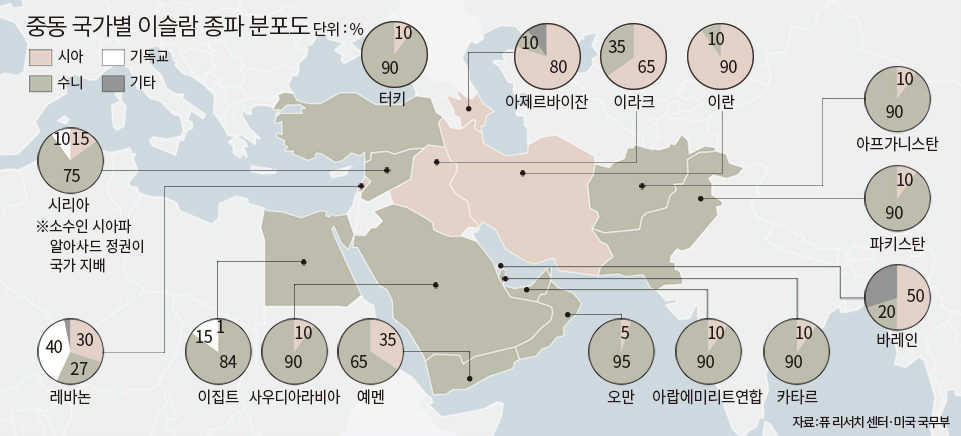
수니파와 시아파는 주로 중동, 아시아, 북아프리카 지역에서 많이 분포되어 있으며, 그들의 비율은 지역에 따라 다릅니다.
- 수니파는 이슬람 세계의 약 **85~90%**를 차지합니다. 주로 사우디아라비아, 터키, 이집트, 파키스탄, 인도 등에서 주류를 이루고 있습니다.
- 시아파는 전체 이슬람 인구의 약 **10~15%**를 차지합니다. 주요 시아파 국가로는 이란, 이라크, 바레인, 아제르바이잔 등이 있습니다. 특히, 이란은 시아파 이슬람의 중심지로 간주됩니다.
4. 수니파와 시아파의 갈등
수니파와 시아파의 차이는 역사적으로 정치적 갈등을 유발하였고, 현재도 일부 지역에서는 종파 간 갈등이 존재합니다. 특히 이란과 사우디아라비아 사이의 지역 패권 경쟁은 수니파와 시아파 간의 갈등이 정치적, 군사적 차원으로 확산되는 주요 요인 중 하나입니다.
결론
수니파와 시아파는 이슬람 역사에서 깊은 뿌리를 가진 두 주요 분파입니다. 그들의 차이는 정치적, 신학적, 법적 측면에서 다양하게 나타나며, 각 분파는 이슬람 공동체 내에서 서로 다른 신앙과 관습을 따르고 있습니다. 이슬람 세계에서는 여전히 이들 간의 갈등이 존재하지만, 많은 지역에서는 두 분파가 공존하며 다양한 형태로 이슬람 교리를 실천하고 있습니다.
Sunni Islam and Shia Islam are the two largest branches within Islam, originating from differences in Islamic history and religious interpretation. These branches emerged from political conflicts and differing interpretations of faith in the 7th century. Over time, they developed distinct traditions, rituals, and legal systems. Sunni and Shia Muslims continue to play significant roles in the Islamic world today, particularly in the Middle East, where their differences are most prominent.
1. Origins of Sunni and Shia Islam
The split between Sunni and Shia Islam began with a critical political event in early Islamic history concerning the succession of leadership after the death of Prophet Muhammad.
- Sunni Islam: Sunnis believe that the successor to Muhammad could be any qualified individual chosen by the community. They recognize the first four caliphs as legitimate leaders, emphasizing political ability and communal consensus over direct lineage to Muhammad.
- Shia Islam: Shias believe that the successor must be someone from Muhammad's bloodline. They particularly regard Ali, Muhammad's cousin and son-in-law, as the rightful successor and believe his descendants should lead the Muslim community.
This political conflict evolved into differences in religious interpretation and practices, leading to the distinct Sunni and Shia branches.
2. Key Differences Between Sunni and Shia Islam
(1) Succession Issue (Caliph and Imam)
- Sunni Islam: Sunnis believe the caliph (political leader of Islam) should be elected by the community's consensus. Therefore, the leader does not need to be a descendant of Muhammad, focusing on political qualifications and capabilities.
- Shia Islam: Shias believe the imam (religious leader of Islam) must be a direct descendant of Muhammad. They assert that only Ali and his descendants can rightfully lead the Muslim community.
(2) Religious Rituals and Worship
- Sunni Islam: Sunnis prefer simple and straightforward worship, emphasizing the five pillars of Islam, including five daily prayers (salat) and fasting during Ramadan. They exhibit differences in practices, such as praying with hands folded.
- Shia Islam: Shias include more symbolic and complex rituals in worship. For example, they commemorate Ali's descendants through rituals like Taziya, and observe Ashura with mourning and self-flagellation to honor Ali's son Husayn's martyrdom.
(3) Islamic Law (Sharia)
- Sunni Islam: Sunnis follow a unified system of Islamic jurisprudence with four main schools of thought: Hanafi, Maliki, Shafi'i, and Hanbali, each interpreting the law differently.
- Shia Islam: Shias follow a single jurisprudence system called the Ja'fari school, where the imam's guidance and interpretation hold legal authority. Shias believe the imam acts as God's representative and holds the authority to interpret the law.
(4) Perspective on the Afterlife
- Sunni Islam: Sunnis generally elect leaders based on community consensus. The doctrinal views on heaven and hell are similar, though interpretations vary within Sunni Islam.
- Shia Islam: Shias consider the imam's authority essential for faith, believing that Ali and his descendants interpret God's will. They see imams as vital guides in the afterlife as well.
3. Regional Distribution of Sunni and Shia Islam
Sunni and Shia Muslims are primarily found in the Middle East, Asia, and North Africa, with varying proportions depending on the region.
- Sunni Islam: Comprising about 85-90% of the Muslim world, Sunnis dominate in countries like Saudi Arabia, Turkey, Egypt, Pakistan, and India.
- Shia Islam: Making up about 10-15% of the global Muslim population, Shias are prevalent in countries like Iran, Iraq, Bahrain, and Azerbaijan. Iran is considered the center of Shia Islam.
4. Conflicts Between Sunni and Shia Islam
The differences between Sunni and Shia Islam have historically led to political conflicts, and sectarian tensions still exist in some regions today. The regional power struggle between Iran and Saudi Arabia is a significant factor in the political and military dimensions of Sunni-Shia conflicts.
Conclusion
Sunni and Shia Islam are deeply rooted branches within Islamic history. Their differences span political, theological, and legal aspects, with each branch following distinct beliefs and practices within the Muslim community. Despite ongoing conflicts in some areas, many regions see coexistence and varied expressions of Islamic faith.